The Story Behind Collecting: Why We Hold On to Things
Every collection starts with an object. But what makes it meaningful is the story behind it.
By Lisette Fernandez, CPO & Co-Founder, Curiyo.io · · 8 min read
Think about something you've kept for years.
Perhaps it's a coin from your childhood, a postcard from a memorable trip, a watch passed down from a grandparent, or a small souvenir you picked up in a place you loved.
To someone else, it might look like just another object.
But to you, it means something.
It might remind you of a person, a place, a moment, or even a version of yourself you don't want to forget.
And that is where the story of collecting begins.
We don't always collect things because they're valuable. Sometimes, they become valuable because we collect them.
Every Collection Has a Beginning
Ask a collector how their collection started, and you'll rarely hear, "I decided to accumulate a hundred objects."
More often, it begins with just one.
A child receives a stamp from another country and becomes fascinated by the places it represents. Someone inherits an old camera and develops an interest in vintage photography. A traveler brings home a ceramic bowl, and before long, each new destination adds another piece to the shelf.
What starts as a single object becomes a curiosity.
Curiosity becomes an interest.
And over time, that interest becomes a collection.
But collecting isn't simply about acquiring more things.
It's about the excitement of discovery, the satisfaction of finding something unexpected, and the joy of connecting objects to experiences.
Every addition represents another chapter in a story that continues to unfold.
Why Do We Collect?
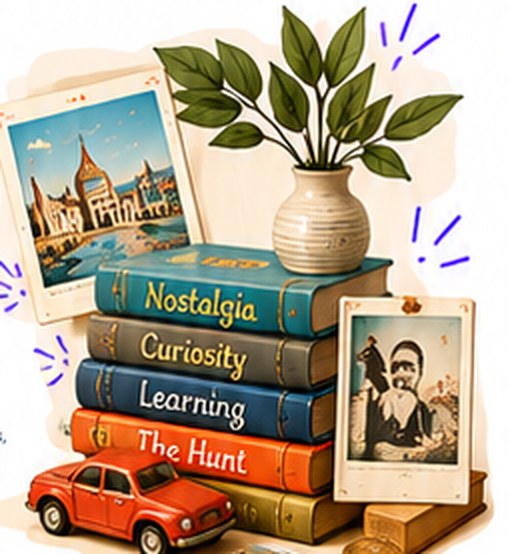
Human beings have been collecting objects for centuries, from natural specimens and artworks to books, coins, and historical artifacts.
But why?
The answers are as varied as the collections themselves.
For some, collecting is about nostalgia. Objects help us reconnect with childhood memories, family traditions, or moments we wish we could revisit.
For others, it's about curiosity and learning. A collection of coins can reveal the history of different countries. Vintage cameras can tell the story of technological innovation. Old postcards can offer glimpses into cities and communities as they once existed.
Some people collect for the thrill of the hunt: discovering a rare piece, completing a series, or finding an object they've searched for over many years.
And for others, collecting is a form of self-expression.
The things we choose to collect often reveal something about who we are, what interests us, and what we find beautiful or meaningful.
A collection can be a reflection of our identity, built one object at a time.
Collecting isn't always about possession. Often, it's about connection.
The Stories Objects Carry
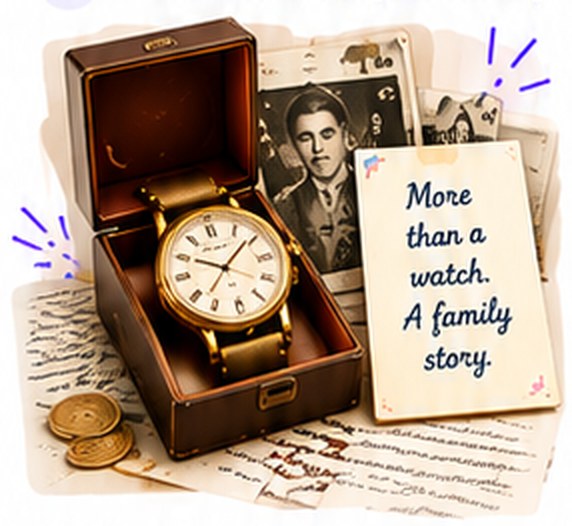
Imagine two seemingly identical vintage watches.
Both were manufactured in the same year. Both are in similar condition. Both may have comparable market values.
But one belonged to your grandfather, who wore it every day for forty years before passing it down to you.
Suddenly, they're not the same.
One is a watch.
The other is a connection to your family's history.
This is what makes collecting fascinating: objects can carry multiple layers of value.
There's the monetary value, determined by factors such as rarity, demand, condition, authenticity, and provenance.
There's functional or aesthetic value, based on how useful or beautiful an object may be.
And then there's personal value, which is often impossible to measure.
A concert ticket might have little resale value, but to the person who attended that performance, it could represent one of the most memorable nights of their life.
A handwritten recipe card might be worth almost nothing in a marketplace, yet priceless to the family that has passed it down through generations.
When we collect, we're often preserving more than physical objects.
We're preserving memories, experiences, and stories that might otherwise fade.
When Ordinary Things Become Extraordinary
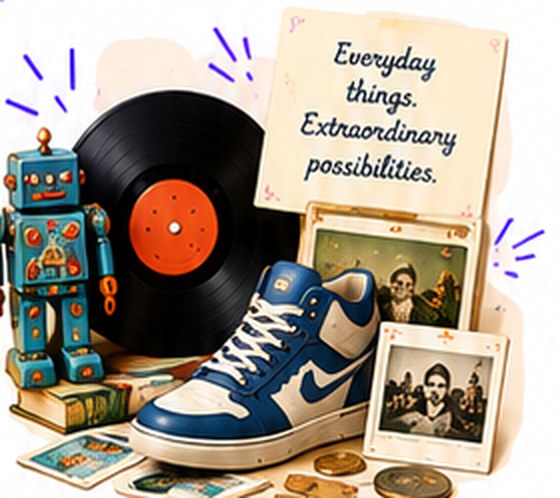
One of the wonderful things about collecting is that almost anything can become collectible.
Coins. Stamps. Vinyl records. Books. Vintage toys. Ceramics. Sneakers. Postcards. Watches. Sports memorabilia.
Even everyday objects that once seemed disposable can become highly sought after over time.
Think about old advertising signs, early electronic devices, or toys that were once mass-produced and sold inexpensively.
Years later, some of these objects become desirable because they represent a particular era, design movement, cultural moment, or shared childhood experience.
Of course, not everything old becomes financially valuable.
Age alone doesn't make something rare. And rarity doesn't automatically create demand.
But the value of an object can change as tastes evolve, communities of collectors grow, and previously overlooked pieces attract new attention.
Something you purchased years ago without a second thought might now have a fascinating history or an unexpected market.
Which raises an interesting question:
How many of us truly know the stories, origins, or potential value of the things we've spent years collecting?
A Collection Is More Than the Sum of Its Parts
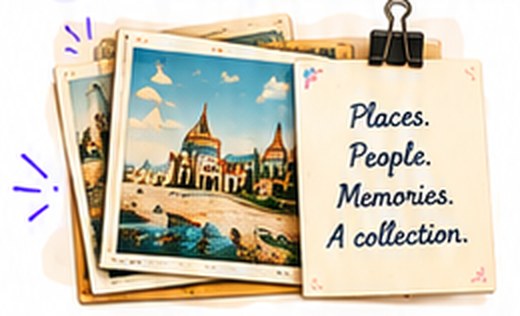
Consider someone who has collected postcards from every city they've visited.
Individually, the postcards may be inexpensive.
But together, they represent decades of travel, exploration, and personal experiences.
Or imagine a collection of vintage cameras gathered over thirty years. Beyond their individual resale values, the collection might illustrate the evolution of photography, design, and technology.
There's meaning in how the objects relate to one another.
A thoughtful collection often develops its own identity, shaped by the collector's interests, choices, and experiences.
That doesn't necessarily mean the collection will sell for more as a group. In some cases, individual items may command higher prices separately.
But its historical, educational, or personal significance can extend far beyond a simple calculation of market value.
A collection tells a story that no single object can tell alone.
The Thrill of the Hunt
Ask a passionate collector about their favorite piece, and you might be surprised by the answer.
It isn't always the most expensive item.
Sometimes it's the one that took years to find.
The rare book discovered in a tiny secondhand shop. The missing record that finally completed a collection. The piece of pottery discovered at a flea market while traveling.
Part of the joy of collecting lies in the search itself.
Every discovery brings excitement, anticipation, and a sense of accomplishment.
And along the way, collectors often become experts in their chosen interests.
They learn to recognize craftsmanship, identify subtle differences between editions, understand historical contexts, and appreciate details that others might overlook.
Collecting becomes a journey of continuous learning.
The more you discover, the more meaningful your collection can become.
When Collections Connect People
Collecting may begin as a personal interest, but it often creates connections with others.
Collectors find communities through antique fairs, exhibitions, local clubs, online forums, and marketplaces.
They exchange knowledge, share discoveries, trade pieces, and celebrate one another's finds.
A love of vintage vinyl can connect people across generations. A fascination with historical coins can bring together people from different countries. A shared interest in old books can lead to friendships built around literature and history.
Sometimes, the stories behind the objects become the reason people connect.
And when collections are passed down to children, grandchildren, friends, or museums, those stories can continue long after the original collector is gone.
In this way, collecting can become an act of preservation, not just of objects, but of culture, knowledge, and personal history.
Knowing What You Have Changes How You Value It
Here's something many collectors eventually discover.
It's surprisingly easy to accumulate a collection without fully understanding everything it contains.
An object purchased years ago might have increased in market value. A seemingly ordinary item could turn out to be an unusual edition. A piece inherited from a relative might have a history worth researching.
And sometimes, an object we assumed was rare turns out to be quite common.
Understanding a collection requires curiosity and a little detective work.
Who made the object? When and where was it produced? How did it come into your possession? Is there documentation that helps establish its authenticity? What condition is it in? Are comparable items being bought or sold today?
These questions help us move beyond assumptions and appreciate what we own more fully.
They also help us make informed decisions.
Should an object be restored or left untouched? Is it worth insuring? Would it benefit from special storage or conservation? Should it be sold, displayed, or passed down?
And perhaps most importantly, how do we make sure the stories behind our collections aren't lost?
This is where keeping records, photographs, purchase details, and personal notes can become just as important as caring for the objects themselves.
Preserving the Story for the Next Generation
Imagine inheriting a box filled with photographs, coins, and keepsakes.
You recognize some of the items, but others are unfamiliar.
You wonder where they came from, why they were saved, and what made them special to the person who collected them.
Now imagine receiving that same box with a little more information.
A note explaining where a coin was purchased. A photograph showing a treasured object in its original setting. A story about the trip during which a souvenir was discovered.
Suddenly, the objects become more meaningful.
You don't just inherit a collection.
You inherit its history.
Documenting collections today can help preserve these stories for the future. Even a few details about an object's origin, significance, or journey can make an enormous difference to someone who encounters it years later.
Because the story behind an object isn't always obvious.
And once that story is lost, it may be impossible to recover.
Discovering the Value of Your Collection
At Curiyo.io, we're fascinated by the idea that the things we own have more stories to tell than we might realize.
Some have financial value.
Some have historical significance.
Some represent craftsmanship, creativity, or moments in our lives.
And others are meaningful simply because of the memories they carry.
Understanding our possessions helps us appreciate them differently. It encourages us to look beyond the surface, discover their origins, recognize their potential value, and make thoughtful decisions about their future.
Whether you're a lifelong collector or someone who has kept a handful of treasured objects, there's something worth discovering in what you own.
Because the journey of collecting isn't just about finding the next piece.
It's also about understanding the pieces you've already found.
What's the Story Behind Your Collection?
The next time you look at something you've collected, ask yourself a few questions.
Why did I choose to keep this?
Where did it come from?
What does it remind me of?
And what would I want someone else to know about it?
You might discover that the story behind the object is just as interesting as the object itself.
After all, we collect objects, but what we're really gathering are pieces of our lives.
And every collection, no matter how large or small, has a story worth telling.
 Curiyo.io™
At Curiyo.io, we believe that understanding what you own is the first step toward appreciating its true value. Discover the stories, history, and potential behind your possessions.
Explore more at Curiyo.io