The Things We Bring Home: A Story of Travel, Collecting, and Finding Value
From the antique markets of Paris to the thrift shops of Amsterdam, discovering why the most meaningful souvenirs often come with a past.
By Lisette Fernandez, CPO & Co-Founder, Curiyo.io · · 8 min read
When I travel, I love exploring a city's markets and secondhand shops.
Of course, I enjoy the famous landmarks, beautiful architecture, wonderful restaurants, and everything else that makes visiting a new place exciting. But there's something particularly fascinating about wandering through an antique market or discovering a little thrift store tucked away on a neighborhood street.
Perhaps it's the excitement of not knowing what I'll find. Or the possibility of discovering something beautiful that someone else has overlooked.
I've come to realize that some of the most interesting things we bring home from our travels aren't necessarily the things made for tourists.
They're objects that already have a story.
And when we bring them home, we become part of that story.
Paris: Where Every Object Has a Past
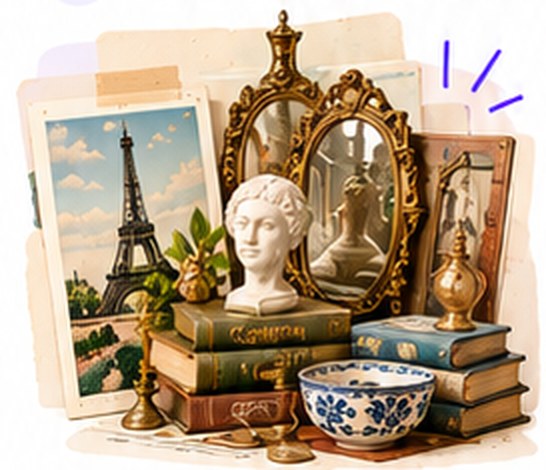
One of my favorite experiences in Paris is exploring its antique markets, particularly the famous Marché aux Puces de Saint-Ouen, just outside the city's northern boundary.
It's an extraordinary place.
With its winding passages, antique dealers, vintage furniture, artwork, lighting, books, jewelry, and unusual curiosities, Saint-Ouen feels like a collection of different worlds brought together.
What makes the market particularly fascinating is its history.
Its origins go back to the late 19th century, when secondhand traders and salvagers began selling discarded objects outside Paris. What started as a place for giving unwanted possessions another life eventually became a destination for collectors, designers, antique enthusiasts, and people searching for something special.
I find that transformation remarkable.
Objects that might once have been considered old, unwanted, or disposable are now displayed, admired, collected, and sometimes sold for significant sums.
Walking through Saint-Ouen encourages you to look at things differently.
An antique mirror isn't just a mirror. A vintage chair isn't simply somewhere to sit. An old painting, decorative box, or brass lamp might represent a particular period of design, a style of craftsmanship, or a glimpse into how people lived decades ago.
And then there are the questions.
Who owned this before? Where did it come from? How did it end up here? What made someone keep it for so long?
For me, that's part of the magic of antique shopping.
You're not simply looking at objects. You're discovering fragments of other people's lives.
Amsterdam: Finding Something New in Something Old
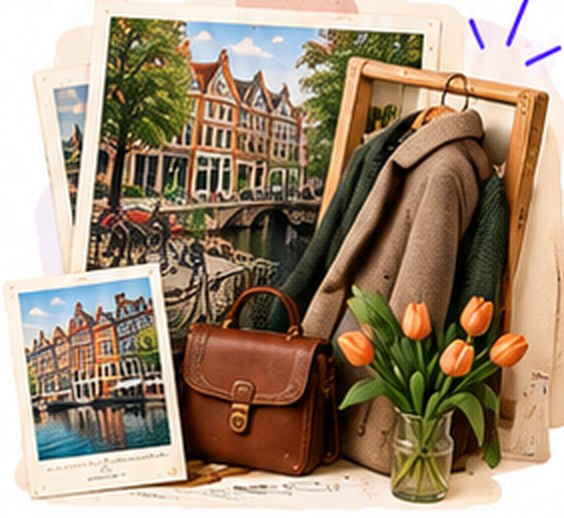
My experiences with secondhand shopping aren't limited to antiques.
In Amsterdam, I particularly enjoyed exploring thrift shops in search of coats.
Amsterdam is a wonderful city for this kind of discovery. Its vintage and secondhand shops offer opportunities to find clothing that feels distinctive, well-made, and different from what you'd typically encounter in a conventional retail store.
There's something rewarding about shopping for a secondhand coat.
Rather than choosing from racks of nearly identical new products, you're looking at pieces from different years, brands, styles, and materials.
You pay attention to details you might otherwise overlook: the quality of the fabric, the stitching, the lining, the buttons, the cut, and how the coat has held up over time.
A coat doesn't necessarily become less desirable because someone else has worn it.
In fact, sometimes its age, craftsmanship, or design is precisely what makes it interesting.
And unlike a typical souvenir that might sit on a shelf, a coat becomes part of everyday life.
Every time you wear it, there's an opportunity to remember the city where you discovered it.
In that way, an ordinary piece of clothing can become a travel memory you actually use.
Collecting Memories, Not Just Objects
I've often wondered why certain things we bring home from our travels become so meaningful.
A souvenir bought at an airport might remind us of a destination. But an object discovered while exploring a local market can remind us of the experience itself.
The neighborhood we wandered through. The shops we entered. The unexpected discovery that made us stop and look twice.
The value of these objects isn't necessarily determined by what we paid for them.
An inexpensive vintage coat may hold more personal meaning than an expensive designer purchase. A small antique found at a market might become more treasured than something bought brand-new.
That's because the object becomes connected to an experience.
Over time, our homes and wardrobes can become collections of these memories.
A piece of pottery from one trip. A painting from another. A vintage jacket from a city we loved visiting.
Individually, they may seem unrelated.
Together, they tell the story of where we've been, what we've discovered, and what caught our attention along the way.
Sometimes, we're not collecting things as much as we're collecting moments.
The Beauty of Giving Things Another Life
There's another reason I've become increasingly interested in antique markets and secondhand shopping.
They offer an alternative to our usual relationship with consumption.
We're constantly encouraged to buy something newer, better, or more fashionable. Products are replaced, styles change, and perfectly useful possessions are often discarded simply because they're no longer considered current.
But antique markets and thrift shops challenge that way of thinking.
A beautiful piece of furniture doesn't stop being useful because it's fifty years old. A well-made coat doesn't lose its purpose because it belonged to someone else.
In fact, many older objects have already demonstrated their durability by surviving years or even decades of use.
Buying secondhand can help extend the useful life of existing products and reduce demand for newly manufactured replacements.
It also encourages us to recognize something important:
Value doesn't disappear simply because ownership changes.
Something that no longer serves one person may be exactly what someone else has been looking for.
And sometimes, what makes a secondhand object appealing is the very thing that makes it different from a new one: its history.
What Makes Something Worth Collecting?
One of the interesting things about collecting is that value is rarely straightforward.
At Saint-Ouen, you might encounter an antique that costs thousands of euros alongside something relatively inexpensive.
In Amsterdam, you might find a beautifully made vintage coat at a fraction of what a comparable new one would cost.
But price alone doesn't tell the whole story.
An object's financial value can depend on its age, rarity, maker, condition, authenticity, craftsmanship, and demand.
Its personal value depends on something else entirely.
Maybe you love the design. Perhaps it reminds you of someone. Or maybe you remember the experience of finding it.
These different kinds of value don't always align.
Something can be financially valuable without being personally meaningful. And something can hold enormous sentimental value without having much resale potential.
For me, the most interesting discoveries are often the ones where those different kinds of value overlap.
An object that's beautiful, useful, thoughtfully made, and connected to a memorable experience.
That's when collecting becomes more than shopping.
The Stories We Don't Always Know
There's one aspect of collecting that I find especially intriguing.
We often buy or inherit things without fully understanding what they are.
An antique found in Paris might have an interesting maker's mark. A vintage coat purchased in Amsterdam might come from a designer or manufacturer that no longer exists.
A piece of furniture might represent a particular design movement. A ceramic object could have been produced using techniques that are no longer common.
And sometimes, something that appears ordinary might turn out to have unexpected value.
Of course, not every secondhand purchase is a hidden treasure.
But understanding an object's history, origin, and potential worth can change the way we appreciate it.
It can also help us make more informed decisions about whether to restore, preserve, insure, resell, or pass it along.
I think there's something wonderful about the idea that the things we already own might have stories we haven't yet discovered.
Bringing the Story Home
There's a difference between owning an object and knowing its story.
Imagine looking at an old coat in your wardrobe years from now.
You might remember that you bought it in Amsterdam, but perhaps not the neighborhood or the shop where you found it.
Or imagine showing someone an antique you discovered at Saint-Ouen. You remember the excitement of finding it, but over time, the details become less clear.
Those small pieces of information may not change the object's market value, but they can make a tremendous difference to its personal meaning.
That's why I think documenting the things we collect is so worthwhile.
A photograph, a note about where something was purchased, a little information about its history, or even a few sentences about why we chose it can preserve the story for years to come.
And if those possessions eventually find their way to someone else, the stories can travel with them.
After all, today's treasured discovery might someday become someone else's vintage find.
Traveling Differently, Collecting Thoughtfully
My experiences exploring antique markets in Paris and shopping for secondhand coats in Amsterdam have reinforced something I increasingly appreciate.
We don't always need to buy something new to discover something valuable.
Sometimes the most interesting things are already out there, waiting for someone to notice them.
Travel gives us an opportunity to discover those objects in places we might never otherwise explore.
And collecting gives us a way to bring a small part of those experiences into our everyday lives.
That doesn't mean every trip needs to end with a purchase.
Sometimes the pleasure is simply in looking, learning, and discovering.
But when I do find something worth bringing home, I like the idea that I'm not just acquiring another possession.
I'm giving an existing object another chapter in its story.
Every Object Has a Journey. What's Yours?
At Curiyo.io, we believe the things we own deserve to be understood and appreciated beyond their original purchase price.
Whether it's an antique discovered in Paris, a vintage coat found in Amsterdam, or an heirloom that's been in the family for generations, every object has a journey.
Some stories are about craftsmanship and history.
Others are about people, places, and memories.
And some are still waiting to be discovered.
The next time you travel, consider wandering into a local antique market or secondhand shop.
Look beyond what's new and fashionable.
You may discover something beautiful, something useful, or something with a fascinating history.
And if you're lucky, you might find an object whose next story begins with you.
Because sometimes, the best things we bring home aren't souvenirs of where we've been. They're stories we get to keep.
 Curiyo.io™
Curiyo.io helps you discover, understand, organize, and preserve the value and stories behind the things you own.
Explore more at Curiyo.io